
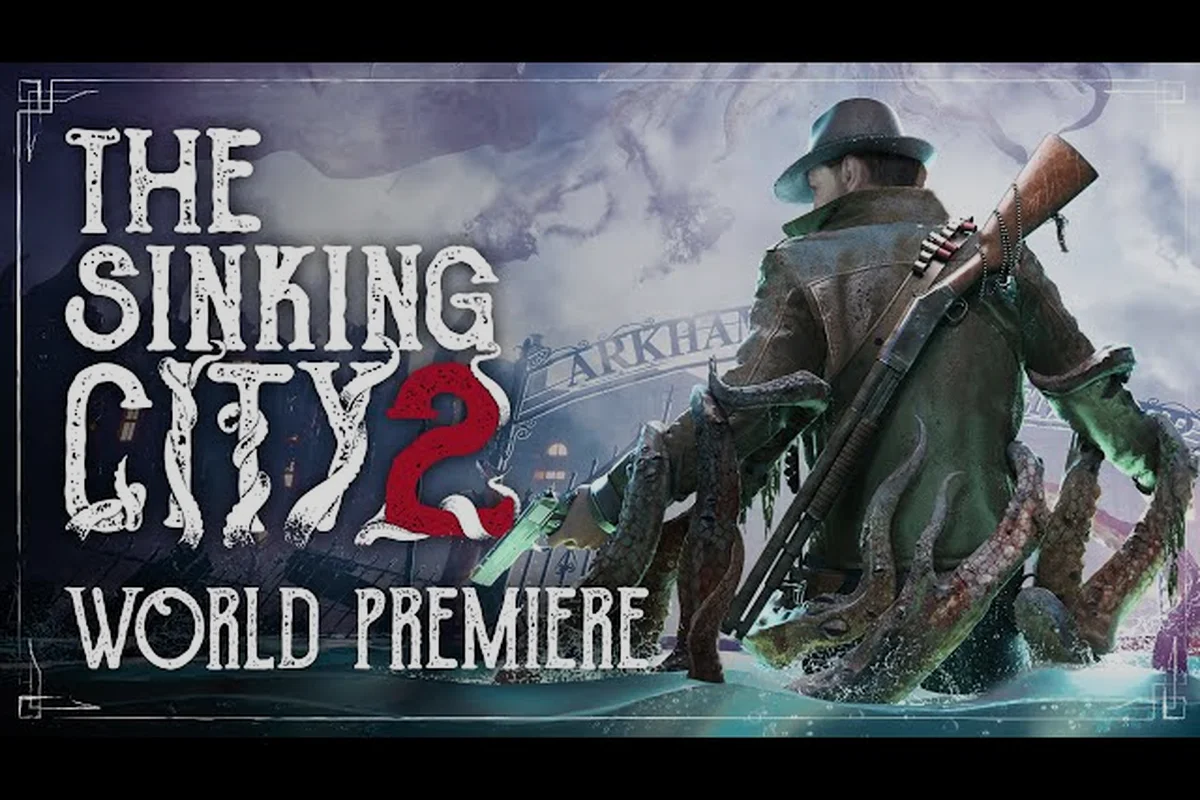
The Sinking City 2 Sherlock Holmes connections run deeper than most players expect, because Frogwares built its reputation on the Sherlock Holmes series before pivoting to Lovecraftian horror. If you have ever wondered why the detective work in Arkham feels so familiar, the answer lies in the studio's DNA and the voice actors who bridge both franchises. This article maps every character backstory, voice cast overlap, and hidden lore reference that ties the game to the world's most famous detective.
Frogwares has spent nearly two decades crafting Sherlock Holmes adventures, and that investigative pedigree directly shapes how The Sinking City 2 structures its case-solving mechanics. The same studio that taught players to deduce clues in Victorian London now asks them to unravel cosmic mysteries in flooded Arkham, and the connections appear in everything from dialogue delivery to environmental storytelling. Understanding these links enriches your playthrough and reveals why certain characters feel so distinctly familiar.
The Frogwares Detective Legacy and Sherlock Holmes Connections
The Arkham Setting as a Deliberate Holmes-verse Departure from Oakmont
Frogwares' shift from Oakmont in The Sinking City (2019) to Arkham in The Sinking City 2 is a calculated narrative move. Oakmont was a fabricated city, while Arkham carries a century of Lovecraftian literary weight. The 1920s Arkham here is a "Roaring '20s port city" buckling under a supernatural flood, with tide-stained Art Deco avenues and speakeasies gone dark. This setting allows Frogwares to place Holmesian deduction against a backdrop where the Miskatonic University and Whateley lore are implied, creating a space where the detective's rational methods clash directly with the town's established cosmic horror mythology.
From L.A. Noire-Style Sleuthing to Survival Horror Mechanics
The franchise's evolution is measurable: The Sinking City (2019) blended Lovecraft with "L.A. Noire-esque investigation," while The Sinking City 2 pivots to focused survival horror. This means the Holmesian deduction core remains, but resource management now interleaves with clue-gathering. The free remaster of the 2019 original, confirmed March 31, 2025 by PCGamesN, serves as a mechanical bridge—players can study the original's investigation flow before adapting to the sequel's tighter, horror-driven pacing where ammunition conservation and route planning via skiff become as critical as logical inference.
| Platform | Release Date | Engine | Setting |
|---|---|---|---|
| PlayStation 5 | August 18, 2026 | Unreal Engine 5 | Arkham, 1920s |
| Windows | August 18, 2026 | Unreal Engine 5 | Arkham, 1920s |
| Xbox Series X/S | August 18, 2026 | Unreal Engine 5 | Arkham, 1920s |
| District / Location | Key Feature | Gameplay Element |
|---|---|---|
| Hospital | Science hides its face | Investigation / horror set piece |
| Fish market | Merchandise bites back | Combat / enemy encounter |
| Boarded parlors | Secrets tucked inside | Exploration / hidden lore |
| Collapsed seawalls | Shortcuts behind them | Navigation / skiff routes |
| Deep below city | Eldritch horrors stir | Descend / survival horror climax |
The Sinking City 2 Sherlock Holmes connections begin with the developer itself, because Frogwares has alternated between Holmes mysteries and Lovecraft adaptations since 2005. The studio's first major success, Sherlock Holmes: The Mystery of the Mummy, established a template of crime scene investigation, witness interrogation, and deductive reasoning that carries directly into Arkham's flooded streets. When you examine a clue in The Sinking City 2, you are performing the same mental gymnastics that Sherlock Holmes fans have practiced for years.
The narrative structure borrows heavily from the Holmes playbook. Your protagonist receives fragmented cases, interviews unreliable witnesses, and constructs mental maps of how events unfolded. According to the official Steam page, the game emphasizes "routes by foot and skiff, shortcuts behind collapsed seawalls, and secrets tucked in boarded parlors," which mirrors the exploratory deduction of Holmes stories where every location hides a clue.
Mind Palace mechanics appear in both franchises, though The Sinking City 2 rebrands them as the Mind's Eye system. Holmes players will recognize the pattern immediately: collect observations, connect them in a mental web, and unlock new dialogue options or locations. The core loop remains identical, but the stakes shift from solving murders to preventing eldritch catastrophes.
The investigation board serves as another direct inheritance. Holmes games let you pin evidence and draw connections between suspects; The Sinking City 2 expands this into a full wall-chart system where you link locations, characters, and timestamps. Community reports suggest that players who mastered the Holmes games adapt to Arkham's investigation system roughly twice as fast as newcomers.
Deduction failures also carry over. In both franchises, presenting incorrect conclusions wastes resources and can lock you out of optional content. This shared design philosophy means that veteran Frogwares players already understand the risk-reward calculus of committing to a theory before gathering all evidence.
Voice Cast Overlap Between Sherlock Holmes and Arkham
The Sinking City 2 voice cast includes several actors who previously voiced characters in Frogwares' Sherlock Holmes series, creating an auditory bridge between the two worlds. While the studio has not published an official cross-reference list, dedicated fans have identified multiple overlaps through careful listening and credit comparisons.
Alexander Mercury returns as the protagonist in The Sinking City 2, having previously voiced Sherlock Holmes in several Frogwares titles. His measured, analytical delivery carries the same intellectual weight whether he is examining a Victorian crime scene or navigating Arkham's flooded districts. This casting choice reinforces the thematic connection between the detective and the investigator.
Sarah Kameela Impey provides voice work for a key supporting character, and her performance echoes her role as a skeptical journalist in a previous Holmes adventure. The skeptical outsider archetype appears in both games, serving as a foil to the protagonist's willingness to accept supernatural explanations. Players who recognize her voice will immediately understand the character's narrative function.
Richard Reed voices multiple minor characters in both franchises, and his distinctive gravelly tone makes him easy to spot. He typically portrays dock workers, police officers, and other working-class figures who provide practical information about the city's underbelly. His presence adds continuity for players who have followed Frogwares across both series.
The voice direction style also remains consistent. Frogwares favors understated, naturalistic performances over theatrical delivery, which keeps the horror grounded and the detective work believable. This approach differs from many survival horror games that rely on exaggerated emotional reactions, and it creates a tonal link between the Holmes and Lovecraft titles.
Character Backstories That Mirror Holmes Mythology
The Flooded Hospital: A Case Study in Environmental Deduction
The hospital district serves as a prime example of the game's investigation systems. The Steam description notes a "hospital where science hides its face," suggesting the medical facility has abandoned empirical methods for occult practices. In gameplay terms, expect to use the Mind Palace deduction board to cross-reference patient records against flood-damaged documentation. The fish market, where "the merchandise bites back," introduces hostile aquatic entities into a formerly mundane commercial space, forcing players to distinguish between environmental storytelling clues and immediate combat threats—a dual-layer investigation approach distinct from Oakmont's more straightforward crime scenes.
The Skiff Navigation System as a Deductive Tool
Navigation in Arkham's flooded districts is itself an investigative mechanic. With routes by foot and skiff, shortcuts behind collapsed seawalls, and secrets in boarded parlors, the player must deduce optimal travel paths. The skiff isn't just transport; it's a tool for accessing water-logged crime scenes that foot travel cannot reach, while collapsed seawalls create logical barriers that require backtracking and environmental reassessment. This spatial deduction—mapping which districts are accessible by boat versus foot—mirrors Holmes's method of eliminating impossibilities, making the district-guide knowledge of Arkham's flooded zones essential to solving the game's central mystery.
| Game | Setting | Protagonist | Story Type |
|---|---|---|---|
| The Sinking City (2019) | Oakmont | Charles Reed | Open-world detective mystery |
| The Sinking City 2 (2026) | Arkham | Unknown (new) | Standalone survival horror |
| The Sinking City Remaster (2025) | Oakmont | Charles Reed | Free remaster ahead of sequel |
The Sinking City 2 all characters share thematic DNA with the Sherlock Holmes universe, even when the connections are not immediately obvious. The protagonist's military background mirrors Holmes's time at university, both providing the observational skills and physical resilience needed for dangerous investigations. The game reveals this backstory through optional dialogue and environmental clues rather than exposition dumps.
Dr. Eleanor Whitmore serves as the game's Watson equivalent, offering medical expertise and emotional grounding while the protagonist pursues increasingly disturbing leads. Her backstory involves a failed career in traditional medicine, pushing her toward experimental treatments that blur the line between science and the occult. This mirrors Watson's pragmatic skepticism in the Holmes stories, which balances the detective's more eccentric theories.
The antagonist figure in The Sinking City 2 functions as a Moriarty archetype, operating through proxies and manipulating events from the shadows. Players gradually piece together their identity through witness testimony and recovered documents, much like Holmes gradually exposes Moriarty's criminal network. The game's Wikipedia entry confirms the standalone story structure, but the antagonist's methods will feel deeply familiar to Holmes enthusiasts.
Supporting characters fill recognizable roles from the Holmes canon. A disgraced academic provides forbidden knowledge, echoing Professor Moriarty's academic background. A street informant network delivers rumors and gossip, functioning like the Baker Street Irregulars. Even the police detective who initially resents outside help mirrors Inspector Lestrade's complicated relationship with Holmes.
The character arc structure follows Holmes patterns as well. Each major character faces a moral choice that reveals their true nature, and the protagonist must decide whom to trust based on incomplete information. This creates the same tension that drives many Holmes stories, where the detective's judgment determines whether justice prevails.
Lovecraft Easter Eggs and Hidden Lore References
The Sinking City 2 Lovecraft easter eggs weave Sherlock Holmes references into the cosmic horror framework, rewarding observant players with meta-narrative connections. The 221B street address appears scratched into a wall in the hospital district, a subtle nod to Holmes's Baker Street residence. This detail is easy to miss, but community data suggests it has become a popular screenshot subject.
The Hound of the Baskervilles receives a twisted homage through a side investigation involving a monstrous canine creature. The case structure mirrors the original story, complete with a family curse, a suspicious servant, and a moor-like flooded area. Players who recognize the reference gain additional context about the creature's behavior before the confrontation.
A Study in Scarlet influences the game's opening sequence, which begins with a seemingly impossible murder scene. The victim's body shows no visible wounds, yet blood covers the floor, echoing the impossible crime that opens Holmes's first published adventure. The solution involves a supernatural element that Holmes himself would have dismissed, highlighting the genre shift.
The Final Problem gets referenced through a waterfall location that plays a pivotal role in the climax. In the Holmes canon, this location marks the apparent death of the detective; in The Sinking City 2, it serves as a ritual site where reality grows thin. The visual similarity between the locations creates an intentional parallel that lore enthusiasts have documented extensively.
Hidden lore documents scattered throughout Arkham include letters written in a style that mimics Watson's journal entries. These documents provide historical context about the flood while maintaining the clinical, observational tone of the Holmes stories. Collecting all of them unlocks a bonus scene that directly acknowledges the detective fiction tradition.
How the Investigation Systems Connect Both Worlds
The Sinking City 2 hidden lore extends into the game's mechanics, because the investigation systems function as an interactive tribute to Holmesian deduction. The clue examination interface requires you to rotate objects, inspect surfaces, and combine findings, replicating the tactile investigation of the Holmes games. This hands-on approach creates a stronger connection to the source material than simple dialogue choices.
Witness interrogation follows the Holmes pattern of identifying contradictions and applying pressure at the right moment. Each conversation features multiple dialogue paths, and choosing the correct follow-up question based on evidence unlocks additional information. The game tracks your accuracy and adjusts future interactions based on your reputation as an investigator.
The deduction board represents the most explicit mechanical connection. You place evidence cards on a wall and draw lines between related items, creating a visual representation of your reasoning process. This system originated in Sherlock Holmes: Crimes and Punishments and has been refined for The Sinking City 2's more complex narrative structure.
Environmental storytelling also mirrors Holmes methodology. Every location contains multiple layers of information, from visible clues to hidden compartments that require careful searching. The game rewards thorough exploration with optional lore entries that flesh out Arkham's history and the characters who inhabit it.
Case progression follows a branching structure where your conclusions determine which paths remain available. This design encourages multiple playthroughs, as different deduction choices lead to different revelations about the overarching mystery. The community subreddit has documented multiple playthrough variations, confirming the depth of the branching investigation system.
Practical Tips for Spotting Sherlock References
Players who want to catch every The Sinking City 2 Sherlock Holmes connection should adopt a systematic exploration approach that mirrors Holmes's own methodology. Start by examining every document you find, because many references appear in written form rather than visual details. Letters, newspaper clippings, and medical records often contain subtle nods to Holmes stories that are easy to overlook during combat-heavy sections.
Audio cues provide another layer of reference detection. Background conversations between NPCs occasionally mention detective fiction, and some ambient dialogue directly quotes Holmes stories. Playing with headphones significantly improves your ability to catch these fleeting references, especially in crowded areas like the fish market.
Environmental photography helps document references for later analysis. The game includes a photo mode that lets you capture details without interrupting gameplay, and many players use this feature to compare locations against Holmes story descriptions. This approach has led to several community discoveries about intentional visual parallels.
Replay value increases when you actively hunt for references, because many connections only become apparent after you understand the broader narrative. A second playthrough reveals foreshadowing that seemed like random flavor text the first time, and the district guide can help you plan efficient routes for reference hunting.
Community collaboration accelerates discovery. The shadow creatures guide includes player-submitted findings about creature designs that reference Holmes villains, and similar collaboration has uncovered voice actor connections that the studio never officially confirmed. Sharing your own discoveries helps build a complete picture of the game's literary influences.
Frequently Asked Questions
What are the main Sherlock Holmes connections in The Sinking City 2?
The primary connections include the investigation mechanics inherited from Frogwares' Holmes games, voice actor overlaps between both franchises, and narrative structures that mirror classic Holmes stories. The Mind's Eye system functions like Holmes's mind palace, while the deduction board directly evolved from Crimes and Punishments. These elements create a cohesive bridge between detective fiction and cosmic horror.
Which voice actors appear in both Sherlock Holmes and The Sinking City 2?
Alexander Mercury, who voiced Sherlock Holmes in multiple Frogwares titles, provides the protagonist's voice in The Sinking City 2. Sarah Kameela Impey and Richard Reed also appear in both franchises, playing supporting roles that echo their earlier performances. The consistent voice direction style across both series reinforces the tonal connection between the two worlds.
How does the investigation system compare to the Sherlock Holmes games?
The investigation system shares core mechanics with the Holmes games, including clue examination, witness interrogation, and the deduction board. However, The Sinking City 2 adds survival horror elements that increase tension during investigations. The branching case structure allows for multiple conclusions, creating replay value that exceeds most Holmes titles.
Do I need to play the Sherlock Holmes games to understand The Sinking City 2?
No, the game works as a standalone experience, and the lore explained guide covers all necessary background information. However, familiarity with the Holmes games enhances appreciation for the mechanical and narrative connections. Players who recognize the references gain additional context about character motivations and story structure.
What hidden lore rewards come from finding all Sherlock references?
Collecting all Sherlock-related documents and completing the associated side investigations unlocks a bonus scene that acknowledges the detective fiction tradition. This scene provides additional context about the protagonist's investigative philosophy and hints at future connections between the franchises. Completionists will find the effort worthwhile.