
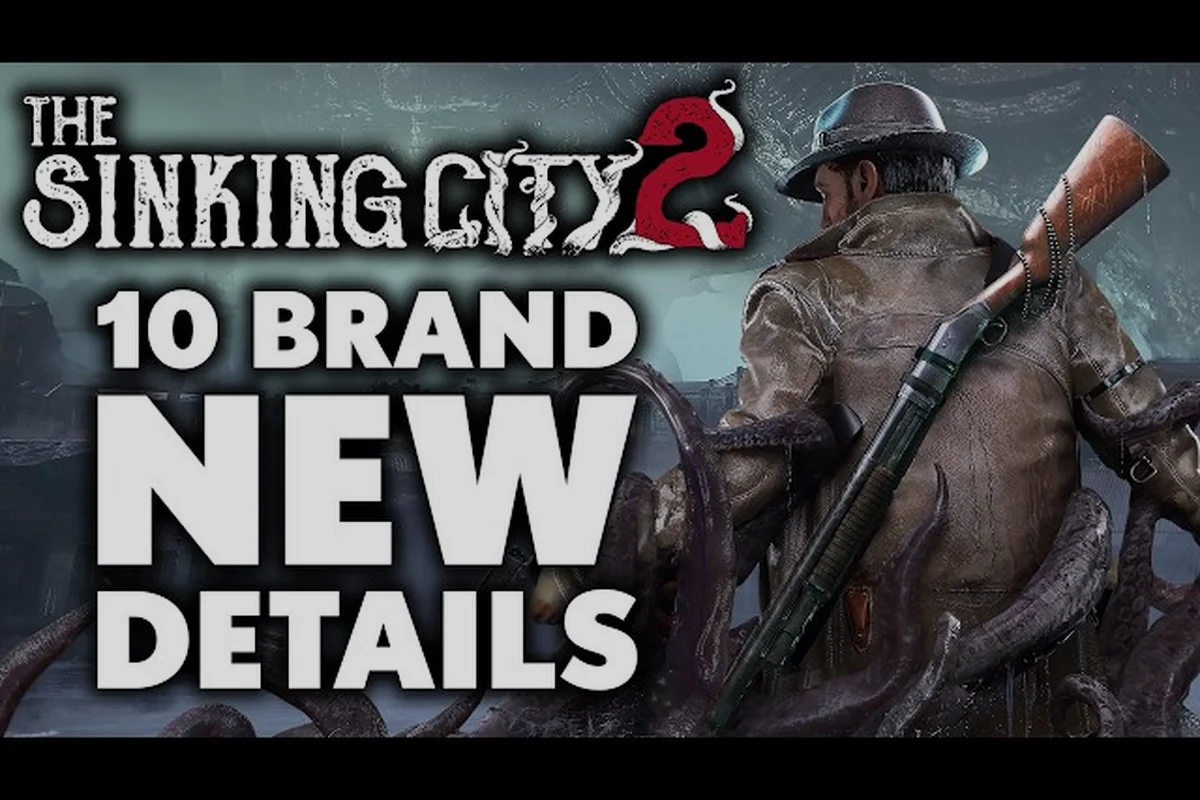
The Sinking City 2 things to know before playing are essential reading if you plan to step into the flooded streets of Arkham this August. Frogwares has traded the sprawling open-world detective work of the 2019 original for a tighter, more oppressive survival horror experience that demands careful resource management and nerves of steel. The game launches August 18, 2026 on PlayStation 5, Windows, and Xbox Series X/S, built in Unreal Engine 5, and while it continues the Lovecraftian nightmare from Oakmont, the story stands completely on its own. This The Sinking City 2 game overview covers everything from combat philosophy to inventory strategy, so you can start your investigation with confidence instead of drowning in confusion.
The Sinking City 2 game overview and core design shift
The most important The Sinking City 2 features guide point is that this is not a direct continuation of the original's open-world formula. According to the official Steam page for The Sinking City 2, the game is a third-person survival horror set in 1920s Arkham after a supernatural flood has consumed the city. The original spread its mystery across an open world that many players found thin, but the sequel narrows the focus significantly. PC Gamer's early coverage describes the shift as moving from a "budget Grand Theft Cthulhu" to something closer to "H. P. Lovecraft's Resident Evil," which captures the tonal and mechanical transformation perfectly.
Level-based progression replaces the free-roam structure, which means every street, building, and alleyway you explore has been handcrafted with intent. The pressure builds deliberately as you push deeper into the flooded districts, and relief only comes in brief refuge at safe houses. This design choice makes every encounter meaningful because you cannot simply drive away from danger or fast-travel to safety when resources run low.
The game's identity rests on three pillars that define the entire experience:
-
Deliberate pacing — combat is slow, tense, and punishing, with no power fantasy power-ups
-
Resource scarcity — ammunition and healing items are rare enough that every shot matters
-
Atmospheric dread — the Unreal Engine 5 rendering creates oppressive fog, water reflections, and shadowy horrors that reward exploration but punish recklessness
This The Sinking City 2 game overview would be incomplete without noting that the story, while set in the same universe, does not require knowledge of the first game. Newcomers can jump into Arkham's nightmare without feeling lost, though veterans will appreciate the connective tissue between the two cities' catastrophes. The flood in Arkham operates under its own rules, and the eldritch forces at work feel distinct from what you encountered in Oakmont.
Combat and survival mechanics you must understand
Managing Fear as a Finite Resource
The Steam storefront describes fear as something you "manage," not just a scripted atmosphere cue. In practice, this means your inventory and sanity economy dictate how deep you push into Arkham's flooded districts. Relief comes only in brief refuge zones, so you must ration supplies between combat encounters and puzzle sections. Unlike the original's detective focus, where clues were the primary currency, The Sinking City 2 forces you to treat ammunition and healing items as scarce commodities—pushing forward without restocking is a calculated risk that can leave you defenseless against the next encounter.
Demo Content vs. the August 18 Full Release
The playable demo, highlighted by PC Gamer on June 7, 2026, offers a vertical slice of Arkham's survival horror loop ahead of the August 18, 2026 launch on PS5, Windows, and Xbox Series X/S. The demo showcases the resource-lean combat and level-based exploration, but the full game expands this into the complete campaign built in Unreal Engine 5. If you're deciding whether the sequel's shift from open-world detective to focused survival horror suits you, the demo is an accurate gauge—it replicates the same inventory management and shortcut-unlocking systems without the open-world padding that diluted the original.
The combat system in The Sinking City 2 is deliberately uncomfortable, and that is the point. You are not a trained soldier or a supernatural investigator with magical abilities; you are an ordinary person trapped in an impossible situation. Firearms exist, but ammunition is scarce enough that the game forces you to consider whether pulling the trigger is worth the cost. Melee weapons degrade with use, and the Worn Revolver you find early on will not carry you through the entire game without careful maintenance.
Resource management sits at the heart of the survival loop, and players who treat this like a standard action game will run out of supplies within the first few hours. The Inventory Grid System limits how much you can carry, forcing tough decisions about what to prioritize. Do you carry extra bullets for the revolver, or do you save space for medical supplies? Should you pick up that crafting component now, or leave it behind because you need room for a key item?
| Resource Type | Common Sources | Primary Use | Scarcity Level |
|---|---|---|---|
| Pistol Ammo | Police stations, locked rooms | Combat against humanoid enemies | High |
| Medical Syringes | Bathrooms, clinic areas | Restore health during encounters | Extreme |
| Scrap Metal | Broken machinery, flooded basements | Craft melee repairs and tools | Moderate |
| Antique Parts | Hidden caches, puzzle rewards | Upgrade equipment at workbenches | Low |
The Sanity System adds another layer of tension that the original game only touched on lightly. Witnessing eldritch horrors, spending too long in flooded darkness, or failing to solve certain puzzles will erode your mental state. When sanity drops too low, the screen warps, audio becomes distorted, and enemies may appear that do not actually exist. Managing sanity requires finding Lighthouse Points scattered through each level, which serve as brief moments of calm where you can recenter yourself.
Combat encounters are designed to be avoided rather than engaged. The Drowned enemies that shamble through the streets are slow but relentless, and their numbers can overwhelm you quickly if you attract attention. The Gulper enemies, by contrast, are fast and aggressive, appearing suddenly from the water to drag you under. Learning to distinguish enemy types by their audio cues and movement patterns is essential for survival, because you will often hear threats before you see them.
Exploration and puzzle design in flooded Arkham
Exploration in The Sinking City 2 rewards patience and careful observation, which is a welcome change from the original's sometimes aimless open-world wandering. Each level contains multiple paths, hidden rooms, and optional objectives that provide meaningful rewards rather than simple collectible padding. The Floodwater Mechanics create a dynamic element where certain areas become accessible only after you manipulate the environment to lower water levels or open new routes.
The puzzle design leans heavily into the detective fantasy that made the original memorable, but with tighter execution. You will examine crime scenes, piece together evidence, and make deductions that affect how certain encounters play out. The Mind Palace system returns in refined form, allowing you to reconstruct events by placing clues in their proper sequence. Getting the sequence wrong does not fail the game, but it does lead to different outcomes and sometimes locks you out of optional rewards.
| Puzzle Type | Frequency | Difficulty | Reward |
|---|---|---|---|
| Evidence Reconstruction | High | Moderate | Story progression, lore details |
| Water Level Manipulation | Medium | Moderate | New areas, shortcut access |
| Locked Door Codes | Medium | Easy | Supplies, ammunition caches |
| Eldritch Symbol Matching | Low | Hard | Unique equipment, secret endings |
The Shortcut System deserves special attention because it fundamentally changes how you approach each level. Unlike the original game, where you could wander freely and always find another path, the sequel locks certain doors permanently. When you unlock a shortcut, you are creating a permanent link between areas that makes future trips faster and safer. Smart players will prioritize unlocking shortcuts early in each level, because the resource savings compound over time.
Environmental storytelling carries much of the narrative weight, with notes, photographs, and audio logs painting a picture of Arkham's final days before the flood. The Flooded Archives area, for example, contains a series of documents that explain how the city's leadership ignored warnings about the rising waters. These details do not affect gameplay directly, but they deepen the horror by making the tragedy feel human rather than purely cosmic.
How The Sinking City 2 compares to the original game
The Sinking City 2 comparison to The Sinking City reveals a developer that listened to criticism and refined its vision. The original game, released in 2019, was ambitious but flawed, with an open world that felt empty and a detective system that sometimes frustrated players with its lack of guidance. The sequel addresses these issues head-on while preserving the Lovecraftian atmosphere that made the first game memorable.
| Feature | The Sinking City (2019) | The Sinking City 2 (2026) |
|---|---|---|
| World Structure | Open world (Oakmont) | Level-based (Arkham) |
| Combat Focus | Optional, clunky | Core survival mechanic |
| Resource Scarcity | Moderate | Extreme |
| Detective System | Open investigation | Guided reconstruction |
| Graphics Engine | Unreal Engine 4 | Unreal Engine 5 |
| Story Connection | Standalone | Direct sequel, standalone story |
The shift from open world to level-based design is the most significant change, and it directly addresses the original's biggest weakness. Players who found Oakmont's streets repetitive and underpopulated will appreciate Arkham's denser, more carefully crafted environments. Every building you enter in the sequel has a purpose, and the Handcrafted Level Design ensures that exploration always leads to something meaningful.
Combat has also received a major overhaul. The original game's shooting mechanics felt floaty and unsatisfying, which encouraged players to avoid combat entirely. The sequel's weapons have real weight, with Recoil Patterns that require practice to master and Ammo Conservation that forces you to think before every shot. Melee combat is similarly improved, with a Stamina-Based Attack System that prevents button-mashing and rewards timing.
The detective mechanics have been streamlined without losing their intellectual appeal. The original's open investigation system sometimes left players wandering aimlessly, unsure of which clue to pursue next. The sequel's Guided Reconstruction system provides clearer feedback while still requiring genuine deduction. You will not be hand-held through every mystery, but you will always know what you are working toward.
Technical performance and platform considerations
The Sinking City 2 runs on Unreal Engine 5, which brings significant visual improvements but also demands more from your hardware. The Lumen Global Illumination system creates realistic water reflections and dynamic lighting that are essential to the game's atmosphere, but these features come with a performance cost. Players on older hardware may need to adjust settings to maintain stable frame rates.
According to community reports from the demo that Frogwares released ahead of the August launch, the game performs well on current-generation consoles. The PlayStation 5 version targets 60 frames per second in performance mode, while the quality mode prioritizes visual fidelity at 30 frames per second. Xbox Series X offers similar options, and the Series S version runs at a lower resolution but maintains acceptable performance.
| Platform | Performance Mode | Quality Mode | Resolution Target |
|---|---|---|---|
| PlayStation 5 | 60 FPS | 30 FPS | 1440p-4K |
| Xbox Series X | 60 FPS | 30 FPS | 1440p-4K |
| Xbox Series S | 60 FPS | 30 FPS | 1080p-1440p |
| PC (High-End) | 100+ FPS | 60 FPS | 4K |
PC players should check the system requirements carefully before purchasing, because the game's minimum specifications are higher than many recent releases. The Ray Tracing Features are optional but significantly enhance the water and reflection effects that define Arkham's flooded streets. If you experience performance issues, the screen tearing fix and settings guide covers common problems and recommended configurations.
The game supports DualSense Controller Features on PlayStation 5, including adaptive triggers that add resistance when firing weapons and haptic feedback that simulates the sensation of wading through water. These features genuinely enhance the horror experience, making each gunshot feel heavier and each submerged step more unsettling. PC players can use a DualSense controller to access these features, though the implementation is less polished than on console.
Save system design is worth noting before you start playing. The game uses Manual Save Points at safe houses rather than autosaves, which means you cannot simply quit and resume from anywhere. This design choice increases tension because you cannot save-scum your way through difficult encounters, but it also means you should plan your exploration carefully to avoid losing progress.
Essential tips for your first playthrough
Why Arkham Replaces Oakmont's Open World
The shift from Oakmont's free-roam map to Arkham's level-based design is the sequel's biggest structural change. Frogwares explicitly abandoned the 2019 original's "thin" open world, where investigation spread too thinly across an entire town. Instead, The Sinking City 2 adopts a "Lovecraft's Resident Evil" approach: contained levels with room for exploration, but no town-wide free-roaming. This means you'll double back through unlocked shortcuts for supplies rather than fast-traveling across a map, making each resource-lean run through flooded streets a deliberate, pressure-building sequence.
The 1920s Flooded Arkham Puzzle Loop
Puzzles in The Sinking City 2 are "unnerving" by design, integrating directly into the flooded Arkham environment. The core loop involves identifying a puzzle's mechanical requirement, locating the necessary tool or key item within the level, and using unlocked shortcuts to return efficiently. This differs from the original's clue-combination detective boards; here, environmental navigation is the puzzle. Expect to wade through submerged buildings, track vertical paths via fire escapes, and remember which locked doors become passable after you find a specific valve or crank, rewarding players who mentally map the level's vertical and horizontal connections.
The Sinking City 2 things to know before playing extend beyond basic mechanics into practical strategies that will save you hours of frustration. The game does not hold your hand, and the opening hours can be brutal if you approach them with the wrong mindset. These tips come from community testing and player experiences shared on the r/TheSinkingCity subreddit, where the community has been dissecting the demo since its release.
Prioritize inventory space over immediate gains. The inventory grid is limited, and you will constantly face the choice between picking up a valuable resource or leaving it behind. A good rule of thumb is to always carry at least two medical syringes and one melee weapon repair kit, because running out of either mid-encounter is often fatal.
Learn the enemy audio cues early. Every enemy type in the game has distinct sounds that telegraph their presence before you see them. The Drowned emit a wet, shuffling noise as they drag their feet through water, while the Gulpers produce a high-pitched clicking sound when they are about to surface. Recognizing these cues lets you avoid encounters entirely, which is always preferable to fighting.
Explore every locked door you find. The game frequently places valuable supplies behind locked doors that require keys or codes found elsewhere in the level. The Lockpick Tool you acquire early on can open basic locks, but advanced locks require specific items. If you cannot open a door immediately, mark its location mentally and return later, because the rewards are almost always worth the detour.
Upgrade your equipment at workbenches. The game's crafting system allows you to improve your weapons and tools, but only if you have collected the necessary components. The Workbench Locations are marked on your map after you discover them, and returning to upgrade your gear before a major encounter can make the difference between survival and death.
Do not neglect your sanity meter. Many players focus exclusively on health and ammunition, but the sanity system can cripple your effectiveness if ignored. When sanity drops below 30 percent, the screen distortion becomes severe enough to interfere with aiming and puzzle-solving. Finding Lighthouse Points to restore sanity should be a priority whenever you enter a new area.
The game's length is another consideration for planning your playthrough. Based on community reports from the demo and developer statements, a typical first playthrough takes between 15 and 20 hours, depending on how thoroughly you explore. Players who rush through the main story will finish faster, but they will miss significant content and upgrades. The demo length and chapter breakdown guide provides a detailed look at how the game's structure affects total playtime.
Frequently Asked Questions
Is The Sinking City 2 a direct sequel to the original game?
Yes, The Sinking City 2 is a direct sequel set in the same Lovecraftian universe, but it features a standalone story that does not require knowledge of the first game. The setting shifts from Oakmont to Arkham, and the narrative follows new characters dealing with a different supernatural catastrophe, though connections to the original exist for observant players.
Do I need to play The Sinking City before starting the sequel?
No, you can start with The Sinking City 2 without playing the original. The game introduces its characters, setting, and mechanics from scratch, and the story stands on its own. However, players who experienced the first game will notice thematic connections and references that add depth to the sequel's narrative.
How long does it take to beat The Sinking City 2?
A typical first playthrough takes between 15 and 20 hours, depending on your exploration habits and difficulty level. Players who focus solely on the main story can finish in around 12 hours, while completionists who find every secret and upgrade may spend 25 hours or more in Arkham's flooded streets.
What platforms is The Sinking City 2 available on?
The Sinking City 2 launches on PlayStation 5, Windows PC, and Xbox Series X/S on August 18, 2026. The game is built in Unreal Engine 5 and takes advantage of current-generation hardware features like ray tracing and fast loading times. There are no plans for last-generation console versions.
Is the combat in The Sinking City 2 difficult?
The combat is intentionally challenging and resource-lean, requiring careful planning rather than aggressive play. Ammunition is scarce, enemies are dangerous, and the sanity system adds an extra layer of pressure. Players who treat the game like a standard action shooter will struggle, but those who embrace stealth and avoidance will find the difficulty fair.