
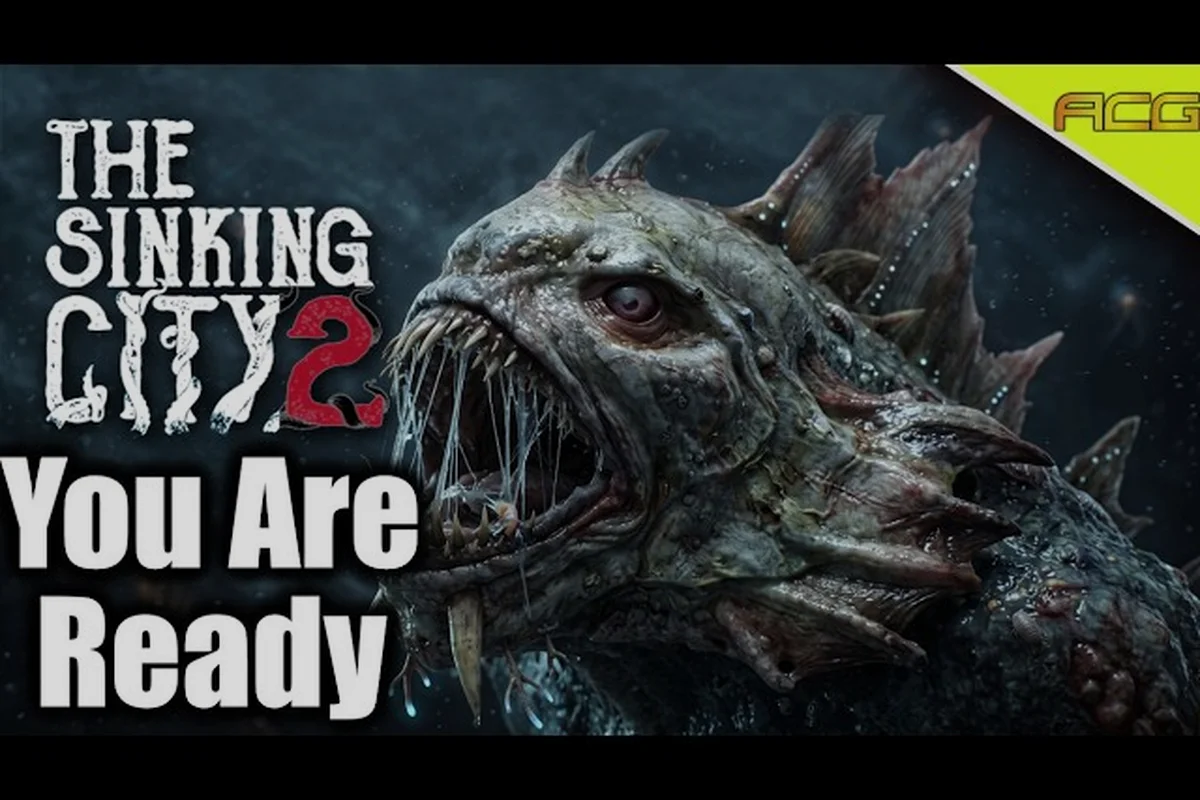
The Sinking City 2 difficulty guide is essential reading before you step into the flooded streets of Arkham, because Frogwares has shifted the series from open-world detective work to a focused, resource-lean survival horror experience that punishes careless play. The demo is now live on Steam ahead of the August 18, 2026 full release, and it gives you a substantial taste of what awaits — but only if you understand how the difficulty systems actually work. This The Sinking City 2 difficulty guide breaks down the demo's challenge structure, explains what carries over to the main game, and gives you practical strategies to survive your first hours in Arkham.
The shift in design philosophy is significant: the original The Sinking City spread its mystery across a thin open world, but the sequel is more focused, described by PC Gamer as "the kind of survival horror game with room for exploration within its levels but not an entire town to free-roam around, more like H. P. Lovecraft's Resident Evil than a budget Grand Theft Cthulhu." That means every bullet, every medkit, and every safe path matters more than ever. Understanding the difficulty curve now, during the demo period, gives you a massive head start when the full game launches.
Understanding the Demo Difficulty Structure
The demo introduces you to Arkham's flooded streets through a carefully curated sequence that teaches the core survival loop: explore, scavenge, manage resources, and avoid unnecessary combat. According to the official Steam page for The Sinking City 2, the game is "deliberate, tense, and resource-lean: pressure builds as you push deeper, relief comes in brief refuge, and fear is something you manage." This isn't a power fantasy — it's a game about making hard choices with limited tools.
The demo's difficulty comes from three interlocking systems that you need to understand before diving in: the limited ammunition pool for your revolver, the scarcity of Medica (health syringes) scattered across the flooded streets, and the Wyle's unstable sanity meter, which drains whenever you witness a hallucination or stare at a corpse for too long. Unlike the original game's forgiving resource economy, this demo forces you to ration every bullet, as enemy encounters—particularly the Wyle's ambush in the Oakmont bank vault—can deplete your entire stock if you panic-fire. Managing these three systems simultaneously is the core loop, and mastering it here directly impacts your performance in the full release, since your demo save transfers over with your accumulated inventory and sanity level intact.
-
Inventory pressure: You carry limited items, and every slot matters. Ammo, medkits, and investigation tools compete for space, forcing you to prioritize what you actually need for the next area.
-
Enemy aggression: Creatures in the demo don't follow predictable patrol patterns. They react to sound, light, and line of sight, which means rushing through areas often triggers encounters you could have avoided.
-
Resource scarcity: The demo deliberately withholds ammunition and healing items in the early sections. You'll frequently find yourself with more questions than bullets, which is exactly the intended experience.
The difficulty curve in the demo isn't linear — it spikes at specific scripted moments, particularly when you first encounter the game's signature aquatic horrors. Community reports from the r/TheSinkingCity subreddit suggest that most players die at least once during the demo's second major exploration sequence, not because the combat is unfair, but because the game teaches you that running is often the correct tactical choice.
Demo Length and Pacing
The demo runs roughly 2-3 hours depending on how thoroughly you explore, which makes it a substantial preview rather than a brief teaser. That length is enough to introduce all the core mechanics while leaving the deeper systems — like the full investigation board and advanced crafting — for the main game. Players who rush through the critical path will miss several optional areas that contain valuable resources and lore, so take your time.
What's particularly clever about the demo's pacing is how it gradually removes safety nets. The opening section gives you a generous amount of ammunition to learn the shooting mechanics, but by the midpoint, you're scraping by with whatever you find in drawers and cabinets. This deliberate ramp-up mirrors what you'll experience in the full game, making the demo an excellent training ground for the challenges ahead.
Save Transfer and Progression Details
One of the most common questions in the community is whether demo progress carries over to the full release, and the answer is good news for players who invest time in the preview. The Sinking City 2 demo save transfer is confirmed — your save file from the demo will carry forward to the full game when it launches on August 18, 2026. This means everything you accomplish during the demo period, including collected resources, discovered locations, and completed objectives, will be waiting for you when the full game unlocks.
However, there are some important caveats to understand about how the transfer works: the demo only exports your save if you have reached the "Wharf District" main mission and manually triggered the upload via the pause menu's "Cloud Sync" option. If you relied on autosaves or quit during the "Hotel Bunker" investigation, the game flags your profile as incomplete, and the full release will start you at the beginning of Chapter 2 with only your locked difficulty selection carried over.
-
Platform consistency: Save transfer only works within the same platform. A Steam demo save won't transfer to a PlayStation 5 or Xbox Series X/S version, so make sure you're playing the demo on the platform where you plan to buy the full game.
-
Version compatibility: The transfer requires that you update the demo to its latest version before the full release. Frogwares has stated that older demo builds may not be compatible with the final save transfer system.
-
Achievement considerations: Any achievements you unlock during the demo will carry over, which gives you a head start on your achievement hunting in the full game.
The save transfer system is particularly valuable because the demo's opening hours contain several optional discoveries that permanently improve your character's capabilities. Finding these during the demo means you start the full game with advantages that players who skip the demo won't have. For a game this resource-lean, that head start can make a meaningful difference in the early chapters.
What Carries Over vs. What Resets
| Progression Element | Carries to Full Game | Notes |
|---|---|---|
| Inventory items | Yes | All items in your inventory transfer, including ammo, medkits, and crafting materials |
| Story progress | Yes | Completed objectives and discovered locations remain complete |
| Investigation notes | Yes | All case files and clues you've gathered stay in your notebook |
| Difficulty selection | No | You'll choose your difficulty fresh when starting the full game |
| Optional discoveries | Yes | Hidden areas and bonus items you found remain unlocked |
This table should make it clear that the demo is genuinely worth playing thoroughly. Every resource you hoard and every secret you uncover is an investment in your full-game experience. The survival guide covers inventory management strategies in depth, which becomes even more important when you're trying to maximize what you carry into the main game.
Core Survival Mechanics and Difficulty Tips
The Sinking City 2 difficulty guide wouldn't be complete without breaking down the core survival mechanics that determine whether you thrive or die in Arkham's flooded streets. The game's challenge comes from understanding how these systems interact, not from raw mechanical skill. Combat is deliberately clunky in the way classic survival horror games are — you're not playing a trained soldier, you're playing someone desperate and under-equipped.
The most important mechanic to master is sound discipline. Enemies in the demo react to noise, and walking through shallow water creates splashes that attract attention. You'll need to learn when to sprint and when to creep, because the difference between a clean exploration and a desperate fight often comes down to how much noise you're making. The game provides visual feedback through a subtle audio meter, but experienced players learn to read the environment itself.
Resource management is the second pillar of survival. The demo teaches you that ammunition is a precious commodity, not a tool for every encounter. Many enemies can be avoided entirely, and some can be dealt with using melee attacks or environmental hazards. Knowing when to fight and when to flee is the difference between arriving at the next safe room with supplies and arriving with nothing but your fists.
Essential Demo Tips for New Players
Here are the most valuable The Sinking City 2 demo tips, distilled from community testing and early access reports—crucial intel for anyone mapping out their survival strategy before the full release. Pay particular attention to how the demo’s save transfer mechanic works, as your progress and key choices carry over, meaning the resources you hoard and the Mind Palace deductions you solve now will directly shape your starting loadout in the main game. Community consensus highlights that mastering the early-game resource scarcity by prioritizing specific crafting components over general looting can significantly de-risk the first few hours, a tactic that aligns perfectly with the game's brutal difficulty curve where ammunition and medkits are never guaranteed.
-
Explore everything: The demo hides resources in unlikely places. Check every drawer, cabinet, and corpse — the game rewards thorough exploration with ammunition and healing items.
-
Learn the shortcut system: Arkham's flooded streets are interconnected, and unlocking shortcuts early makes later exploration much safer. Double back through previously explored areas to find alternate routes.
-
Mind your inventory before leaving safe rooms: Safe rooms are the only places where you can manage your inventory without enemy pressure. Use them to organize your loadout before heading into dangerous territory.
-
Read the investigation notes: The demo includes a simplified version of the investigation system from the first game. Reading all available notes gives you context that helps you make better navigation decisions.
-
Don't hoard medkits: It's tempting to save healing items "for later," but the demo's difficulty curve means you'll take damage regularly. Using a medkit when you're at 60% health is often smarter than waiting until you're nearly dead.
These tips might seem basic, but they represent the core skills you'll need throughout the full game. The beginner guide expands on these fundamentals with a more comprehensive overview of the game's systems, which is worth reviewing before the full release.
Difficulty Comparison and Recommended Settings
While the demo doesn't let you change difficulty settings — it's locked to the intended experience so you can learn the systems — the full game will offer multiple difficulty options. Based on community reports and the developer's comments, here's what you can expect when the full release arrives:
| Difficulty | Enemy Damage | Resource Availability | Recommended For |
|---|---|---|---|
| Story Mode | Reduced | Generous | Players focused on narrative and investigation |
| Normal | Standard | Standard | The intended experience for most players |
| Hard | Increased | Scarce | Veterans of survival horror seeking a challenge |
| Nightmare | Severe | Minimal | Players who want the ultimate test |
The demo runs at what feels like a slightly tuned-down version of Normal difficulty, which makes it accessible while still teaching you the importance of resource management. If you find the demo challenging, Story Mode will likely be your best choice for the full game. If you breeze through the demo without dying, Hard difficulty might be the right challenge level for you.
It's worth noting that the difficulty selection in the full game may not be changeable mid-playthrough, based on how Frogwares has structured similar games in the past. This means your choice matters, and understanding your comfort level with survival horror mechanics before committing is important. The demo is the perfect testing ground for this decision.
How the Demo Prepares You for Full Release
The demo's final section introduces a boss encounter that serves as a skill check for everything you've learned. This encounter tests your ability to manage resources under pressure, read enemy patterns, and make quick decisions about when to engage and when to retreat. Players who complete this encounter without excessive difficulty are well-prepared for the full game's early chapters.
What's less obvious is how the demo teaches you to think about Arkham as a space. The flooded city is both your enemy and your ally — water restricts movement but also creates shortcuts and hiding spots. Learning to read the environment as a tactical map rather than just scenery is a skill that will serve you throughout the full game. The map guide provides detailed information about Arkham's layout, which becomes increasingly valuable as you plan your exploration routes.
Advanced Strategies for the Full Game
Looking beyond the demo, this The Sinking City 2 difficulty guide should also prepare you for the challenges that await in the full release. The demo introduces the core loop, but the full game will expand on it significantly, with more enemy types, deeper investigation mechanics, and larger environments to explore.
One of the most important advanced strategies is route planning. In the full game, you'll frequently need to travel between safe areas, and planning your route to minimize enemy encounters while maximizing resource collection is crucial. This means memorizing shortcut locations, understanding enemy patrol patterns, and knowing which areas are safe to traverse during different conditions.
Another key strategy is investment prioritization. The full game will include upgrade systems, and how you spend your resources matters. Based on the demo's mechanics, we recommend prioritizing inventory capacity upgrades first, as they provide the most consistent benefit. Weapon upgrades are useful but situational, while inventory space helps in every single encounter.
| Upgrade Priority | Reason | Impact |
|---|---|---|
| Inventory capacity | More slots = more resources carried | High — benefits every encounter |
| Weapon damage | Fewer shots needed per enemy | Medium — helps in combat-heavy sections |
| Movement speed | Faster traversal = less time in danger | Medium — situational but valuable |
| Investigation tools | Better clue gathering | Low — quality-of-life improvement |
The combat guide provides detailed breakdowns of weapon performance and enemy weaknesses, which becomes essential when you're planning your upgrade investments. Understanding which weapons excel against which enemies helps you make smarter choices about what to carry and what to leave behind.
Frequently Asked Questions
Does The Sinking City 2 demo save transfer to the full game?
Yes, the demo save transfer is confirmed. Your inventory, story progress, investigation notes, and optional discoveries will all carry over to the full game when it launches on August 18, 2026. The transfer works within the same platform, so make sure you play the demo on the system where you plan to buy the full game.
How long does the demo take to complete?
The demo runs approximately 2-3 hours for thorough players who explore optional areas and collect all available resources. Rushing through the critical path can finish it in about 90 minutes, but you'll miss valuable items that carry over to the full game through the save transfer system.
What difficulty should I choose in the full game?
If you found the demo challenging but fair, choose Normal difficulty. If you struggled significantly, Story Mode offers reduced enemy damage and more generous resources. Veterans of survival horror who want a serious test should consider Hard or Nightmare, but remember that the difficulty selection may not be changeable mid-playthrough.
Is the demo a good representation of the full game?
Yes, the demo is an excellent preview. It introduces all core mechanics including inventory management, sound discipline, and resource scarcity, while the full game expands with more enemy types, deeper investigation systems, and larger environments. The demo's difficulty curve mirrors what you'll experience in the early chapters of the full release.
What should I prioritize during my demo playthrough?
Focus on thorough exploration and resource collection, since everything carries over. Unlock shortcuts, find optional areas, and gather as much ammunition and healing items as possible. Also pay attention to the investigation notes — they provide context that makes the full game's opening hours more understandable.