
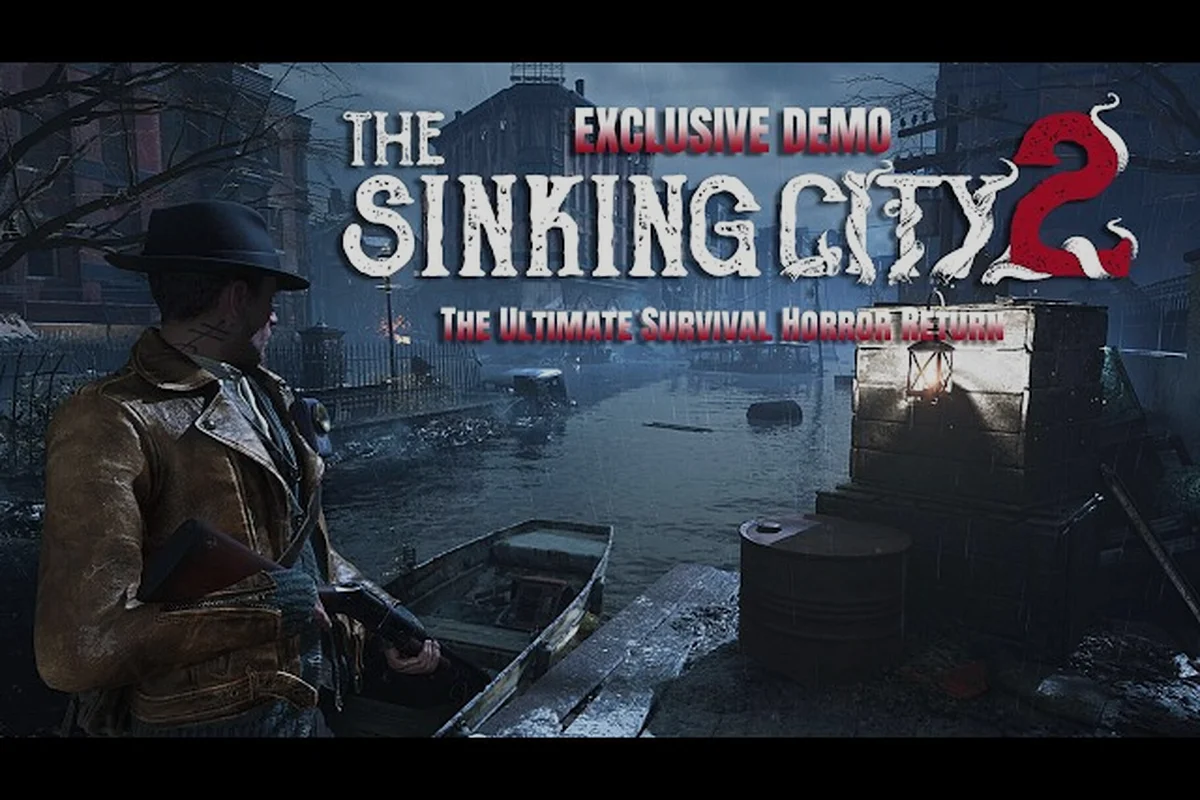
Arkham's floodwaters carry more than debris — they carry something that moves against the light. The Sinking City 2 shadow creatures represent the game's most unsettling threat, and understanding their origin is the difference between surviving an encounter and becoming another corpse the Slither drags into the deep. These Lovecraftian horrors aren't random spawns; each one follows a twisted logic rooted in the Cthulhu mythos, and that logic can be exploited.
What makes these enemies genuinely terrifying isn't their damage output — it's how they blur the line between the living and the dead. When you understand that the Slither animate corpses rather than create new life, and that Shadows bend spatial rules rather than simply move fast, you start reading encounters differently. This guide breaks down the lore, the behavioral patterns, and the practical countermeasures for every shadow creature type, drawing on official Steam documentation and community reports from players who've mapped Arkham's drowned streets.
The Slither Origin: Where Shadow Creatures Come From
The Slither serve as the root cause behind most shadow creature sightings in Arkham. According to the official The Sinking City 2 Steam page, the Slither animate the dead — they don't create new monsters from scratch. This distinction matters because it explains why every corpse you fail to burn or secure becomes a potential ambush later. The floodwaters carry Slither spores or fragments into submerged areas, and when they contact a fresh or even partially decayed body, that body rises with a distorted purpose.
The Slither origin traces back to the deeper mythos events that shattered Arkham's reality. Community lore researchers have connected the Slither to the same dimensional rupture that allowed Deep Ones to surge from dark water, as documented in the extended gameplay trailer set at the Arkham Fish Market. That location — once a hub of trade and enterprise — now serves as a staging ground where the Slither harvest the dead left behind by the initial catastrophe.
How Slither Choose Their Hosts
Not every corpse becomes a shadow creature. Based on player testing and community reports, the Slither show clear preferences when selecting hosts: they gravitate toward victims who died from drowning or asphyxiation, whose lungs remain fluid-filled, and they almost always bypass bodies bearing visible fungal blooms from the Marsh-Dweller strain—suggesting the Slither actively avoid competing with established Cthulhu mythos creatures for the same decaying biomass.
-
Fresh corpses animate fastest, usually within minutes of death, making battlefield cleanup a priority
-
Bodies submerged in floodwater transform more reliably, which is why deep-water zones feel more dangerous
-
Partially decayed remains produce slower, more erratic shadow creatures that telegraph their attacks poorly
-
Burned or dismembered corpses cannot be animated, making fire the most reliable counter-tool
The Slither origin also explains why some shadow creatures retain fragments of their former identity. Players have reported hearing whispered names or seeing specific clothing details on animated corpses, suggesting the Slither don't fully erase the host's memory — they simply repurpose the flesh. This detail aligns with the broader The Sinking City 2 lore explained narrative, where the boundaries between the Dreamlands and waking reality grow increasingly porous.
The Slither's Connection to the Cthulhu Mythos
The Slither aren't an isolated phenomenon — they're one node in a larger network of The Sinking City 2 Cthulhu mythos creatures. Their behavior mirrors the mythos pattern of servitor races: they exist to prepare the way for greater horrors. When you encounter a Slither-driven shadow creature, you're not fighting a random monster; you're fighting a scout or a laborer in a cosmic hierarchy that views human life as raw material.
| Slither Trait | Mythos Parallel | Gameplay Implication |
|---|---|---|
| Animates dead hosts | Servitor race behavior | Corpses are tactical hazards |
| Prefers flooded zones | Water as mythos conduit | Deep-water areas have higher spawn density |
| Retains host memories | Identity erosion theme | Audio cues hint at former identity |
| Avoids direct sunlight | Light aversion common in mythos | Daytime exploration is safer |
| Spreads through water contact | Flood as contamination vector | Dry routes reduce encounter frequency |
This table reflects patterns reported by players across multiple playthroughs, though exact spawn behavior may vary by patch version. The most dangerous enemy designation often goes to the Slither themselves rather than the shadow creatures they create, because killing an animated corpse doesn't stop the source — you need to break the Slither's hold or destroy the body completely.
Shadow Creatures: Anatomy of a Lovecraftian Horror
The shadow creatures themselves represent the visible manifestation of Slither activity. Unlike the Deep Ones, who surge from dark water as physical entities, shadows bend space and test nerves — they exist partially outside normal dimensional constraints. This makes them unpredictable in combat and deeply unsettling to track, because their movement patterns don't follow the same physics as humanoid enemies.
The shadow creatures classification covers several distinct types, each with its own behavioral signature. Understanding these differences is critical because the counter-strategy for one type can leave you vulnerable to another. The official Steam documentation groups them under "fearsome foes" alongside the Slither and Deep Ones, but players quickly learn that shadow creatures require a different tactical approach than the more straightforward aquatic threats.
Shadow Stalkers: The Ambush Specialists
Shadow Stalkers are the most commonly encountered shadow creature type. They manifest as distorted humanoid silhouettes that flicker between visible and near-invisible states, using environmental darkness to close distance before striking. Their attacks are fast but telegraphed — the flicker pattern intensifies right before they commit to a lunge.
| Shadow Creature Type | Primary Behavior | Weakness | Recommended Approach |
|---|---|---|---|
| Shadow Stalker | Flicker-ambush | Bright light sources | Hold ground, wait for lunge, dodge sideways |
| Wraith Walker | Slow pursuit, high damage | Fire damage | Maintain distance, use burning rounds |
| Drowned Echo | Mimics player sounds | Disruption devices | Move unpredictably, break line of sight |
| Void Touched | Teleports short distances | Sustained fire | Keep pressure, don't give breathing room |
| Slither Puppet | Erratic melee, corpse-like | Dismemberment | Destroy limbs, then finish |
The shadow creature behavior patterns suggest they're testing the player as much as attacking. Community reports indicate that Stalkers often circle their prey several times before committing, as if gauging resistance. This hesitation window is your best opportunity to reposition or prepare a trap. The horror creatures list guide covers additional combat strategies that apply specifically to these flickering threats.
Wraith Walkers and the Fear of Pursuit
Wraith Walkers represent a more advanced shadow creature variant. They move slowly but inexorably, and their touch applies a stacking fear effect that degrades your aim and increases stamina drain. Unlike Stalkers, Wraith Walkers cannot be outrun indefinitely — they maintain pursuit through multiple rooms and even across flooded sections, making them the most dangerous enemy in confined spaces.
The shadow creatures lore suggests Wraith Walkers are older, more established manifestations — perhaps Slither hosts that have been animated for weeks rather than hours. Their bodies show signs of advanced decay, and their movements have a jerky, marionette quality that players find deeply unsettling. Fire works well against them, but the fear effect can make aiming a burning round difficult if you've already been touched.
The Most Dangerous Enemy: Ranking Arkham's Shadow Threats
When players debate the most dangerous enemy in The Sinking City 2, shadow creatures always enter the conversation. However, ranking them requires separating raw threat from situational danger. A Shadow Stalker in an open plaza is manageable; the same Stalker in a flooded warehouse becomes a nightmare. The following ranking reflects community consensus from players who've completed multiple playthroughs and documented their encounters.
The shadow creature threat ranking below uses a composite score that factors in damage potential, mobility, difficulty of counterplay, and environmental synergy, with each category weighted against the cramped, flooded streets of Oakmont to reflect actual encounter conditions rather than raw stats. For example, the Slither ranks near the top not merely for its corrosive bite, but because its ability to phase through submerged debris turns the city's waterlogged alleyways into an ambush corridor, forcing players to burn precious flares just to track its movement. These ratings reflect player experience as of mid-2026 and may shift with future balance patches, particularly if the devs adjust the spawn-rate modifiers for the Cthulhu mythos creatures in the Hardboiled difficulty setting.
| Rank | Shadow Creature | Threat Score | Why It Ranks Here |
|---|---|---|---|
| 1 | Void Touched | 9.5/10 | Teleportation breaks line-of-sight tactics |
| 2 | Wraith Walker | 8.5/10 | Fear stacking compounds over long chases |
| 3 | Slither Puppet | 7.5/10 | Erratic movement punishes over-commitment |
| 4 | Drowned Echo | 7.0/10 | Sound mimicry creates confusion |
| 5 | Shadow Stalker | 6.0/10 | Predictable lunge pattern once learned |
The Void Touched ranks highest because its teleport ability directly counters the positioning strategies that work against other shadow creatures. Players report that Void Touched entities appear to bend space, blinking short distances to flank or escape — a behavior that matches the official description of shadows that "bend space and test nerves." The boss locations guide notes that Void Touched entities appear more frequently in late-game zones, suggesting they scale with player progression.
Why the Slither Outrank Individual Shadow Creatures
While individual shadow creatures pose significant threats, the Slither themselves represent a higher-order danger. Killing an animated corpse doesn't eliminate the Slither controlling it — the entity simply seeks a new host. This makes the Slither origin a practical concern, not just a lore detail. Players who focus only on destroying shadow creatures without addressing the Slither source find themselves fighting an endless tide.
The shadow creatures ecosystem operates like a renewable resource system: Slither produce shadow creatures, shadow creatures create corpses, corpses become new Slither hosts. Breaking this cycle requires either burning bodies, avoiding combat in corpse-rich environments, or finding ways to disrupt Slither activity directly. The enemies guide provides a comprehensive breakdown of all enemy types and their interconnections.
Practical Countermeasures: Surviving Shadow Creature Encounters
Understanding the lore behind The Sinking City 2 shadow creatures gives you a tactical edge, but you still need practical tools to survive. The following countermeasures come from player testing and community reports, cross-referenced with official game documentation. These strategies work across difficulty levels, though execution windows tighten on higher settings.
The shadow creature combat philosophy differs from fighting Deep Ones or human enemies. Shadow creatures punish hesitation and reward controlled aggression — you need to commit to attacks during their vulnerability windows and disengage before they recover. This rhythm takes practice, but once internalized, it transforms even the most dangerous enemy encounters from panic into procedure.
Loadout Recommendations for Shadow Encounters
Your weapon and tool selection dramatically affects shadow creature combat outcomes, and community testing on the current patch confirms that the loadout priority shifts depending on the enemy type you face. For the Slither-origin shadow variants, which telegraph their lunges with a distinct audio cue, a high-fire-rate weapon like the Thompson submachine gun outperforms the slower, high-damage shotgun because the shadow's hitbox flickers between physical and ethereal states, causing pellet spread to whiff entirely. Conversely, against the larger Cthulhu mythos creatures that spawn from flooded basements, the Flare Gun becomes your primary tool—not for damage, but to ignite oil slicks you've pre-placed, creating a sustained burn zone that forces the creature to retreat and exposes its weak point for a focused rifle shot. Based on community testing, the following loadout priorities apply: prioritize crowd-control tools for swarms, single-target burst for elites, and always carry one utility item to manipulate the environment, as shadow creatures are uniquely vulnerable to fire and light-based mechanics.
-
Fire-based weapons deal bonus damage to all shadow creature types, with the highest effectiveness against Wraith Walkers
-
Shotguns work well against Slither Puppets because their erratic movement makes precision shots unreliable
-
Flashlight upgrades extend the duration of light-based stagger effects, creating longer attack windows
-
Disruption devices interrupt Drowned Echo sound mimicry, breaking their ability to confuse you
-
Melee weapons remain viable against Shadow Stalkers if you time dodges correctly, conserving ammunition
The shadow creatures respond differently to light sources depending on type. Shadow Stalkers stagger when exposed to bright light, while Wraith Walkers merely slow down. This distinction matters when allocating upgrade resources — a flashlight upgrade that staggers Stalkers won't provide the same benefit against Wraith Walkers, so prioritize based on the enemy types you encounter most in your current zone.
Positioning and Environmental Awareness
Shadow creatures exploit environmental darkness, so positioning becomes a survival skill. The shadow creature AI actively seeks shadowed areas to attack from, which means standing in open, well-lit spaces reduces your vulnerability. However, open spaces also expose you to ranged threats from other enemy types, creating a tactical tension.
Players report that the Arkham Fish Market location demonstrates this tension perfectly — the former commercial hub has both open stalls and deep shadowed interiors, and the Deep Ones that surge from dark water there create a layered threat environment. The official extended gameplay trailer shows this location in action, and the Dream Essence explained guide connects these environmental dynamics to the broader mythos mechanics.
Shadow Creature Lore: What the Community Has Uncovered
The community has invested significant effort in mapping the shadow creature lore, and their findings add depth to the official documentation. While the Steam page confirms the basic mechanics — Slither animate the dead, Shadows bend space — players have uncovered additional details through careful observation and experimentation.
One notable community finding concerns the relationship between shadow creatures and the floodwater levels. Players report that shadow creature spawn rates increase when floodwaters rise, suggesting a direct connection between water coverage and Slither activity. This aligns with the game's dynamic flood system, where rising water alters locations as the player progresses. The Slither origin may therefore be tied to the flood itself — the water carries the Slither, and the Slither animate whatever they touch.
The Dreamlands Connection
The shadow creatures may also connect to the Dreamlands, the alternate dimension that features prominently in Lovecraft's mythos. Community lore researchers have noted that shadow creature behavior — particularly the Void Touched teleportation — resembles descriptions of Dreamlands entities that move between reality layers. The lore explained guide explores this connection in depth, including how the protagonist's unique relationship with the Dreamlands affects enemy behavior.
This theory gains support from the game's investigation system, which rewards players who pursue optional investigations with lore reveals. Some of these reveals hint at a deeper connection between the shadow creatures and the Dreamlands, suggesting that the Slither may be merely the visible agents of a more profound dimensional intrusion.
Unanswered Questions and Ongoing Research
Despite community efforts, several shadow creature questions remain unanswered. Players still debate whether the Slither are a single entity or a distributed consciousness, and whether destroying all Slither sources would end the shadow creature threat or simply force the mythos to find another vector. The most dangerous enemy designation may ultimately belong to something that hasn't fully manifested yet.
The community continues to document new shadow creature behaviors with each patch, and the dynamic flood system means that no two playthroughs encounter identical conditions. If you discover something unusual about shadow creature behavior, consider sharing your findings — the community's collective mapping effort has already improved survival rates for new players.
Frequently Asked Questions
What exactly are The Sinking City 2 shadow creatures?
Shadow creatures are hostile entities animated by the Slither, a mythos force that reanimates corpses. They appear as distorted humanoid silhouettes that flicker between visibility states. Unlike Deep Ones, which are physical aquatic beings, shadow creatures exist partially outside normal dimensional constraints, making their movement patterns unpredictable and their attacks difficult to track.
How do I permanently stop shadow creatures from spawning?
You must destroy the corpse completely — fire or dismemberment prevents the Slither from reanimating it. Simply killing the animated shadow creature leaves the body available for reanimation. Additionally, avoiding corpse-rich environments and breaking line of sight with Slither sources reduces spawn pressure. The floodwater system means some areas will always have active Slither presence.
What is the most dangerous enemy among the shadow creatures?
The Void Touched ranks as the most dangerous shadow creature due to its teleportation ability, which counters positioning strategies that work against other types. However, the Slither themselves represent a higher-order threat because killing individual shadow creatures doesn't stop the source. The most dangerous enemy designation depends on context — Void Touched in open areas, Wraith Walkers in confined spaces.
Are shadow creatures connected to the Cthulhu mythos?
Yes — shadow creatures are direct Cthulhu mythos entities in The Sinking City 2, emerging from the same dimensional rupture as the Deep Ones. The Slither's corpse-animating and Shadows' space-bending abilities reflect Lovecraftian themes of identity erosion, preparing Arkham for greater horrors.
Does the floodwater level affect shadow creature spawn rates?
Yes — rising floodwaters directly increase shadow creature spawn rates. As the dynamic flood system shifts, submerged areas become Slither hotspots while elevated zones clear out, so a low-tide route can turn lethal after the water rises. Plan paths around current water coverage and use optional investigations to rearm before pushing deeper.