
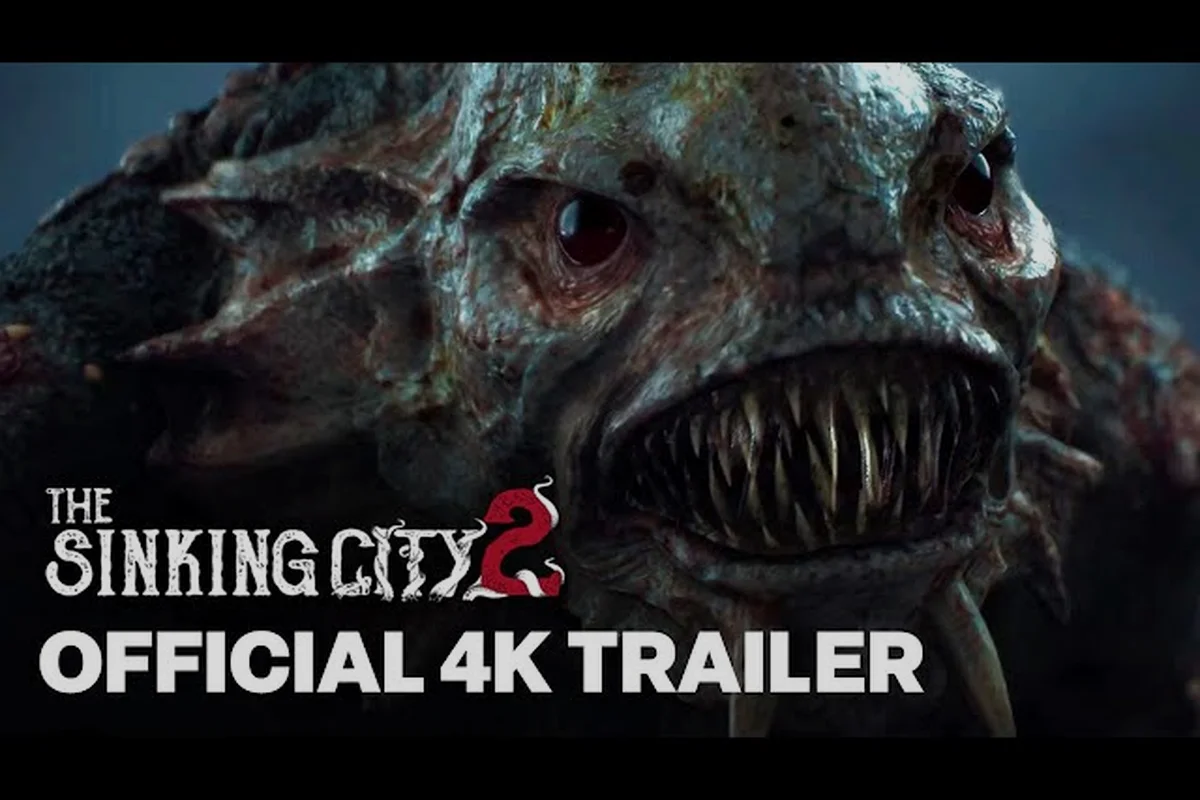
The Sinking City 2 eldritch deity lore is the gravitational center of Frogwares' upcoming survival horror sequel, and understanding it changes how you read every flooded street and boarded speakeasy. Arkham didn't sink because of a storm or a broken levee — the supernatural flood that drowns the city in the 1920s is a deliberate act, one tied directly to cosmic entities that treat human civilization as an afterthought. Because the game releases August 18, 2026 on PlayStation 5, Windows, and Xbox Series X/S, players are already digging into what the developers have revealed about the entity behind the water, and the answers point to something far older than the city itself. This article breaks down the known lore, the flood's origin, and how the sequel connects to the 2019 original, so you can walk into Arkham with the context the game expects you to have.
The Sinking City 2 eldritch deity: What We Know So Far
Frogwares has been deliberately vague about naming the exact entity responsible for Arkham's flooding, but the official Steam store page for The Sinking City 2 describes a city "buckling under a supernatural flood" where "eldritch horrors stir" deep below the streets. That phrasing matters because it frames the flood not as a natural disaster but as an intrusion from below — something pushing upward through the earth and water alike. The game's world explained through environmental storytelling suggests the entity operates through the flood itself, using water as both weapon and medium.
Community reports from players who attended early preview events note that the hospital district contains murals depicting a massive, tentacled form rising from the sea, though the imagery is deliberately fragmented. The developers have confirmed that the entity predates human settlement in the region, which aligns with Lovecraftian horror explained through the lens of cosmic indifference — this isn't a vengeful god punishing sin, but a force of nature that happens to be conscious and hostile. The Drowned God theory, popular among fans, suggests the entity is tied to the deep ocean trenches off the New England coast, where the pressure and darkness create conditions that humanity was never meant to witness.
What makes this iteration of the eldritch deity distinct from the first game is the scale of its ambition. In Oakmont, the threat was localized and tied to a specific cult's rituals. In Arkham, the entity appears to be actively reshaping the city's geography, collapsing seawalls and creating new waterways that serve its unknown purpose. The Tide-Wrought districts, as the developers call them, are zones where the flood has completely reorganized the urban layout, and players will need to navigate these transformed spaces using both foot and skiff.
Why Is Arkham Flooded: The Flood Explained Through Lore
The Sinking City 2 eldritch deity: The Hospital's Hidden Science Wing
The Steam store page specifically calls out a hospital "where science hides its face" as a key Arkham location tied to the entity's influence. This is a deliberate contrast to Oakmont's overtly occultist Wykwood University in the 2019 original. Expect the deity's corruption here to manifest as clinical experimentation rather than ritual worship—likely involving mutated patients and surgical notes that piece together how the flood's psychic pressure warps human biology. The fish market's "merchandise bites back" suggests a similar biological corruption spreading outward from the hospital's patient zero.
Lovecraftian Horror Explained: The Entity's Unknowable Design
Unlike Cthulhu's physical manifestation in Lovecraft's canon, this deity operates through environmental storytelling. The "secrets tucked in boarded parlors" and "shortcuts behind collapsed seawalls" suggest the entity doesn't directly attack but rather reshapes Arkham's geography to trap investigators. This aligns with the L.A. Noire-esque investigation mechanics confirmed by Frogwares—the horror derives from piecing together the entity's logic through environmental clues rather than combat encounters. The survival horror framing means the deity's presence is felt through resource scarcity and navigation challenges, not jump scares.
The question of why is Arkham flooded has multiple layers, and the answer depends on whether you're looking at the in-game explanation or the thematic one. According to the world explained in promotional materials, the flood began after a series of unexplained seismic events that cracked the bedrock beneath the city, allowing seawater to pour into the subway tunnels and lower districts. But the supernatural component becomes obvious when you notice that the water level doesn't obey physics — it rises and falls according to patterns that match the phases of the moon, but also correlate with the appearance of certain creatures.
The Flood-Tide Ritual theory, discussed extensively in community forums, suggests that the entity is using the water to create a new spawning ground. The fish market, which the Steam description notes has "merchandise that bites back," is one of the first locations where the transformation becomes visible. Local fishermen began reporting catches with human teeth and eyes arranged in impossible patterns weeks before the flood reached its current level, and those reports stopped abruptly when the harbor became impassable.
The flood explained through the game's investigation mechanics reveals that Arkham's founding families knew about the entity long before the disaster. The Wetherell Line, a genealogical record mentioned in early gameplay footage, shows that certain bloodlines were marked for the entity's service, and the flood may be a harvesting event rather than a punishment. This reframes the disaster as a planned operation, with the city's infrastructure — its hospitals, its fish markets, its underground tunnels — serving as organs in a larger body the entity is trying to grow.
| Flood Phase | Timeline | Key Event | Player Impact |
|---|---|---|---|
| Phase 1: The Cracks | 3 months before game start | Seismic events fracture bedrock | Subway tunnels become navigable waterways |
| Phase 2: The Rise | 6 weeks before game start | Water breaches lower districts | Ground-level routes become hazardous |
| Phase 3: The Change | 2 weeks before game start | Creatures begin surfacing | Fish market and harbor become combat zones |
| Phase 4: The Drowning | Game start | City fully submerged in key districts | Skiff becomes primary traversal method |
Lovecraftian Horror Explained: How the Entity Fits the Mythos
Lovecraftian horror explained through the lens of The Sinking City 2 isn't about jump scares or gore — it's about the slow realization that human agency is an illusion. The entity behind the flood doesn't hate humanity; it simply doesn't register us as significant. This is the core of cosmic horror, and Frogwares has leaned into it by making the flood itself the antagonist rather than a single monster. The water is everywhere, it's patient, and it's always rising, which creates a pressure that no boss fight can replicate.
The Dream Essence system, carried over from the first game, reinforces this theme by blurring the line between the player's investigation and the entity's influence. Characters who spend too long in flooded areas begin to experience visions of a sunken city that predates Arkham by thousands of years, and those visions contain architectural details that match the ruins beneath the current streets. This suggests the entity has done this before — drowned a civilization, waited, and returned when a new one grew over the bones of the old.
The characters guide elements of the game show how different people respond to this revelation. Some, like the hospital administrator who continues performing surgeries on patients that are already dead, embrace the entity's logic. Others, like the dock workers who refuse to leave their posts even as the water rises, cling to routine as a defense against meaninglessness. The game's world explained through these characters creates a spectrum of denial, and the player's position on that spectrum shifts based on the choices they make during investigations.
The Sinking City 2 Characters Guide: Key Figures and Their Roles
Why Is Arkham Flooded: The Roaring '20s Timeline Collapse
The flood's supernatural nature is underscored by the game's 1920s setting, which the Wikipedia entry confirms as a direct sequel to Oakmont's 2019 events. The entity's awakening appears tied to Arkham's Art Deco infrastructure—the "tide-stained avenues and battered Art Deco" aren't just aesthetic. The deity's emergence likely triggered a localized temporal collapse, freezing Arkham in a perpetual 1920s state while the floodwaters rise. This explains why the city's speakeasies are "gone dark" and districts remain "water-worn" rather than rebuilt, as time itself has stopped responding to natural progression.
How the Eldritch Deity Connects to the First Game's Events: The Oakmont Remaster Bridge
Frogwares confirmed a free remaster of the 2019 original launching before The Sinking City 2's August 18, 2026 release date. This isn't just a port—it's a narrative bridge. The remaster likely includes new investigation cases that foreshadow Arkham's deity, connecting Oakmont's flood to Arkham's through a shared cosmic entity. The standalone story structure means new players can start here, but the remaster's inclusion of Dream Essence mechanics and Calvin Reed's storyline provides the mythological foundation for understanding why Arkham's deity operates differently from Oakmont's Innsmouth-inspired horrors.
Understanding the cast is essential for grasping the full scope of the eldritch deity's influence, because each major character represents a different relationship with the entity. The Harbormaster, who appears in the opening sequence, is the first character to recognize that the flood isn't natural, but his warning comes too late to save the city. His journal, which players can find in the harbor office, contains a detailed account of the water's behavior that contradicts every official explanation.
The Surgeon-General of the flooded hospital represents the scientific response to the supernatural, and her arc shows how rational inquiry fails when the subject refuses to follow rational rules. Her research notes, scattered across the hospital's upper floors, document the transformation of flood victims into something that breathes water, and her final entry suggests she's begun to hear the entity's voice in the pipes. The Fishmonger, meanwhile, has embraced the change — he's built a thriving business selling the mutated catches, and he's become something of a cult leader among the survivors who believe the flood is a purification.
| Character | Faction | Relationship to Entity | Key Location |
|---|---|---|---|
| The Harbormaster | City Authority | Denial → Recognition | Harbor Office |
| The Surgeon-General | Medical Establishment | Scientific Investigation | Flooded Hospital |
| The Fishmonger | Emerging Cult | Active Worship | Fish Market |
| The Archivist | Historical Society | Research | City Archives |
The Archivist is perhaps the most important figure for lore enthusiasts, because her collection contains the only complete record of Arkham's founding and the rituals that kept the entity dormant for centuries. Her archive includes maps of the original settlement, which was built on a series of artificial islands that have since merged into the mainland — a detail that explains why the flood follows such specific patterns. The connections to the first game are strongest in her storyline, as she's discovered documents referencing Oakmont and the events of the 2019 title.
The Sinking City 2 World Explained: Arkham's Transformation
The world explained through gameplay footage shows a city that's been radically reorganized by the flood, and each district has its own relationship with the water. The Art Deco District, which was the city's commercial heart, is now a network of rooftop walkways and flooded ground floors, with the skiff serving as the primary means of moving between buildings. The Hospital Complex has become a vertical environment, with the lower floors completely submerged and the upper floors serving as a refuge for the few remaining medical staff.
The Fish Market is where the transformation is most visible, and it's also where the game's combat mechanics get their first serious test. The "merchandise that bites back" mentioned on the Steam page refers to the mutated fish that have grown teeth and a taste for human flesh, and they swarm in groups that require careful resource management. The Underground Network, which connects all the districts through flooded subway tunnels, serves as both a shortcut system and a horror set piece, with the darkness broken only by the player's flashlight and the occasional bioluminescent creature.
Players who want to understand the full scope of the city's transformation should check the things to know before playing guide, which covers the traversal mechanics and how the flood affects navigation. The key insight is that Arkham is a vertical city now — the flood has created multiple layers of exploration, and the same street can be a thoroughfare, a diving site, or a monster den depending on the water level at any given moment.
How the Eldritch Deity Connects to the First Game's Events
The connections to the first game are more substantial than a simple sequel nod, and they suggest that the entity in Arkham is either the same force that plagued Oakmont or a related being from the same cosmic family. The Oakmont Connection is established through the Archivist's documents, which reference a "sister city" that experienced a similar catastrophe decades earlier. The rituals that the Oakmont cult used to summon their entity share structural similarities with the symbols found in Arkham's underground, though the Arkham versions are older and more complete.
The Calvin Reed storyline from the first game becomes relevant here, because Reed's research into the eldritch entities created a framework that Arkham's cultists appear to have built upon. The Dream Essence system, which was central to Reed's investigation in Oakmont, works differently in Arkham — the entity here is more active, more present, and less willing to hide behind proxies. Where Oakmont's entity operated through cultists and hallucinations, Arkham's entity is the flood itself, making the entire city its body.
| Connection Point | First Game (Oakmont) | Second Game (Arkham) |
|---|---|---|
| Entity Type | Indirect, proxy-driven | Direct, environmental |
| Cult Structure | Centralized, hierarchical | Decentralized, emergent |
| Player Role | Investigator | Survivor/Investigator |
| Dream Essence | Investigation tool | Survival mechanic |
The vs The Sinking City comparison guide breaks down the mechanical differences, but the lore difference is equally significant. The first game was about uncovering a conspiracy; the second game is about surviving a presence. This shift in tone reflects the entity's increased power — it no longer needs to hide, because the flood has given it a physical form that can't be argued with or reasoned with. The Drowned City beneath Arkham, which players can access through certain flooded tunnels, contains evidence that the entity has been preparing for this moment for centuries, and the current flood is merely the final stage of a plan that predates European settlement.
Frequently Asked Questions
What is the main eldritch deity in The Sinking City 2?
Frogwares hasn't officially named the entity, but the game's world explained through environmental storytelling points to a deep-sea being that predates human civilization. The flood is its method of reshaping the city into a spawning ground, and the mutated creatures that appear throughout Arkham are byproducts of its influence rather than its primary form.
Why is Arkham flooded in The Sinking City 2?
The flood is supernatural rather than natural, triggered by seismic events that cracked the bedrock and allowed the entity's influence to rise from below. The water behaves according to patterns that match the entity's cycles, and the flooding is a deliberate act designed to transform the city into an environment where the entity can thrive.
How does The Sinking City 2 connect to the first game?
The sequel is a direct continuation of the same cosmic horror universe, with references to Oakmont and Calvin Reed's research appearing in Arkham's archives. The entity in Arkham appears to be related to the one in Oakmont, though it operates more directly and on a larger scale, using the flood as its primary instrument.
Is The Sinking City 2 a standalone story?
Yes, the game features a standalone story that doesn't require playing the first game, though knowledge of the original enhances the experience. The connections to the first game are present through documents and environmental details, but the main narrative focuses on Arkham's flood and the entity behind it, making it accessible to newcomers.
What should I know before exploring Arkham's flooded districts?
The flood has created a vertical city where water levels change the available routes, so mastering the skiff and understanding the water patterns is essential. The fish market and hospital are early hotspots for creature encounters, and the underground tunnels offer shortcuts but come with significant risk. Check the complete guide for detailed traversal strategies.