
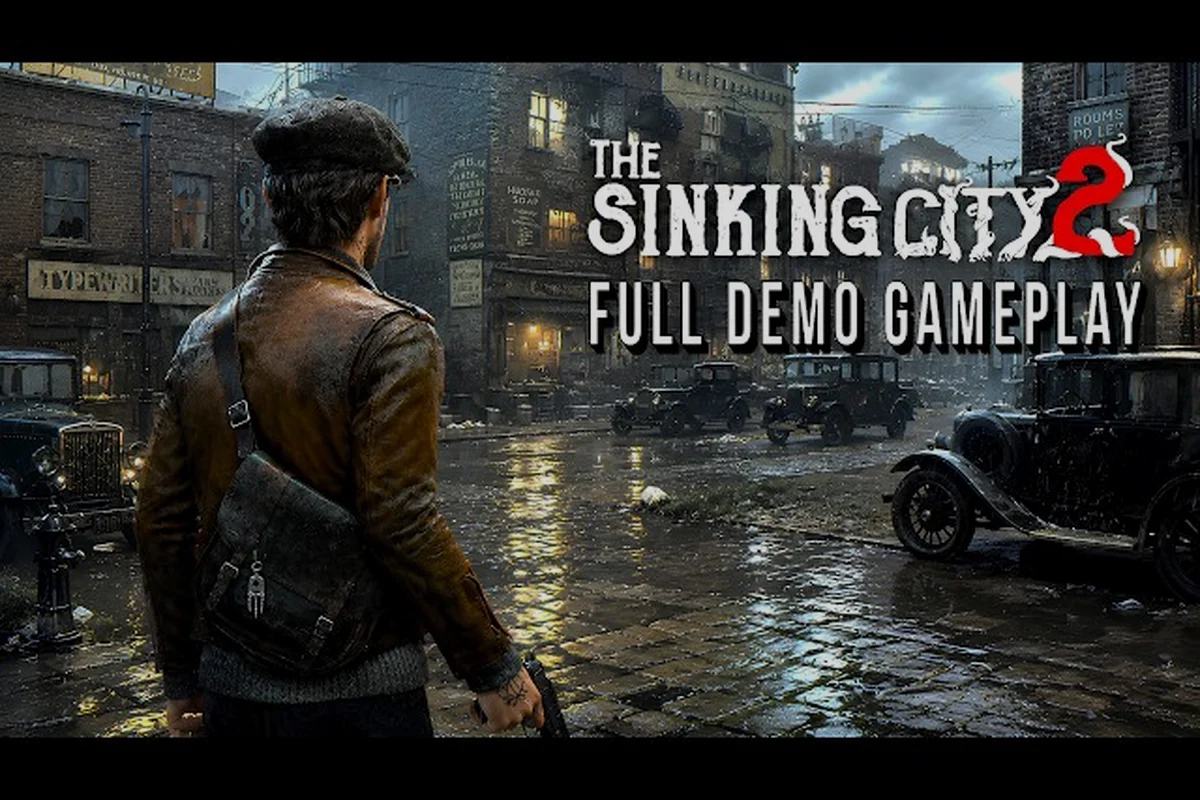
The Sinking City 2 shifts the spotlight from pure detective work toward survival horror, but that doesn't mean the optional investigations are any less rewarding. These side cases hide some of the game's best lore, practical upgrades, and alternate solutions that can completely change how you approach a flooded Arkham. While the main story never forces you to touch them, skipping The Sinking City 2 optional investigations means leaving valuable resources and narrative depth on the table.
The key difference from the first game is that these cases are genuinely optional — they never gate story progress, but they do unlock safer routes, hard supplies, and upgrades that change how you endure the next encounter. According to the official Steam page for The Sinking City 2, exploration is the key to survival: you'll read ritual residues, sift through grisly clues, and decode journals that shouldn't exist. This guide breaks down how to find every clue, solve the trickiest puzzles, and decide which side cases deserve your limited resources.
Why The Sinking City 2 optional investigations matter
| Optional Investigation Reward | Effect on Gameplay | Source |
|---|---|---|
| Safer routes | Unlocks alternate paths that bypass flooded or enemy-dense areas | Steam store description |
| Hard supplies | Provides consumables and crafting materials for survival | Steam store description |
| Upgrades | Permanent improvements that change how you endure encounters | Steam store description |
| Alternate solutions | Adds new puzzle-solving options for main and side cases | Wikipedia gameplay summary |
| Lore reveals | Unlocks background story details about Oakmont and the flood | Wikipedia gameplay summary |
| Secret unlocks | Grants hidden items, locations, or endings not available otherwise | Wikipedia gameplay summary |
The optional investigation system in The Sinking City 2 rewards players who stray from the critical path with tangible benefits that ripple through the entire campaign. Unlike the first game where side cases often felt mandatory for progression, these new optional cases are designed as genuine choices — you can ignore them entirely, but you'll feel the difference in difficulty during combat-heavy sections. Community reports consistently highlight that players who complete even half of the available side cases enter late-game encounters with noticeably better gear and more flexible approaches.
The rewards fall into several distinct categories that appeal to different playstyles:
-
Safer routes — some optional cases unlock shortcuts or drain floodwater sections, letting you bypass dangerous enemy clusters entirely
-
Hard supplies — ammunition, medkits, and crafting materials that become scarce in the later chapters
-
Weapon upgrades — unique modifications that aren't available from standard vendors
-
Lore reveals — background stories that contextualize Arkham's flooding and the entities behind it
-
Alternate solutions — some main story puzzles have easier paths if you've completed specific optional cases first
The case selection screen tracks your progress across all investigations, and the game's dynamic floodwater system means some cases become inaccessible if you wait too long. This creates a natural tension between exploring thoroughly and pushing forward with the main story, since rising waters can permanently seal off certain areas. Players who prioritize The Sinking City 2 optional investigations early tend to have a smoother experience overall, because the resource economy in this game is deliberately tight.
How to find clues in The Sinking City 2
Finding clues in The Sinking City 2 requires a different mindset than the first game's detective work. The investigation system has been streamlined — you won't spend hours cross-referencing a mind palace — but the clues themselves are more environmental and contextual. The clue guide below outlines the core mechanics you'll rely on across most optional cases.
Reading ritual residues
Ritual residues are glowing, often faint markings left behind after supernatural events. They appear on walls, floors, and even ceilings, and they're easy to miss if you're moving quickly. The game's visual design intentionally blends these residues into the environment, so you need to slow down and scan systematically. According to community testing, most ritual residues are positioned near water damage patterns or mold growth, which serves as a subtle visual cue for where to look.
When you find a residue, interact with it to trigger a brief vision sequence that reveals nearby clues or puzzle elements. These visions are short but dense — they often show you a symbol, a location, or a sequence that you'll need to replicate later. The ritual guide approach works best here: treat each residue as a breadcrumb that leads to the next one, rather than an isolated discovery.
Decoding forbidden journals
Forbidden journals are scattered throughout optional case locations, and they serve a dual purpose. First, they provide narrative context — the writers clearly enjoyed filling these pages with unsettling details about Arkham's decline. Second, and more practically, they often contain cipher keys or symbol references that you'll need for nearby puzzles. Some journals are locked behind simple rotation puzzles, while others require you to find a specific item in the same building before the pages become readable.
The journal system connects directly to the game's puzzle design. A journal might describe a ritual sequence that you then need to perform at a separate altar, or it might contain a sketch of a mechanism that shows you which levers to pull in which order. Players who skip reading these journals often find themselves stuck on puzzles that would have been straightforward with the right context.
Tracking environmental clues
Beyond the supernatural elements, The Sinking City 2 fills its optional cases with traditional environmental storytelling. Blood trails, displaced furniture, broken locks, and unusual water currents all count as clues. The game doesn't highlight these with markers — you're expected to notice them organically. This is where the how to find clues mechanics really shine, because the game rewards careful observation rather than brute-force searching.
One useful technique reported by players is to toggle your flashlight off periodically in dark areas. Some clues only become visible when the lighting shifts, particularly phosphorescent markings that react to darkness rather than light. This counterintuitive approach has helped many players locate hidden passages and secret rooms that would otherwise remain undiscovered.
Solving the trickiest optional case puzzles
The Sinking City 2 optional cases feature a variety of puzzle types, and some of them are genuinely challenging. The good news is that the game provides enough information to solve everything logically — you just need to know where to look. Here's a breakdown of the most common puzzle categories you'll encounter.
| Puzzle Type | Common Location | Key Mechanic | Difficulty |
|---|---|---|---|
| Safe combinations | Bank buildings, private residences | Find the combination through journal entries or residue visions | Moderate |
| Ritual sequences | Altars, flooded basements | Replicate the order shown in a vision or journal sketch | Hard |
| Lever puzzles | Industrial areas, pumping stations | Match symbols or colors to unlock doors | Easy |
| Cipher decoding | Libraries, study rooms | Use a key found in a nearby journal | Moderate |
| Floodwater routing | Street-level cases | Redirect water flow to reveal submerged entrances | Hard |
The safe puzzle in the demo received a patch update on June 12, 2026, according to the official patch notes — the developers adjusted the evidence related to this puzzle to make it clearer. This suggests the team is actively monitoring player feedback on puzzle clarity, which is a good sign for the full release. If you're struggling with a specific puzzle, check whether a recent patch has changed how the evidence works.
The ritual sequence approach
Ritual sequences are the most intimidating puzzles in the optional cases, but they follow a consistent logic. Every ritual has three components: a starting point, a sequence order, and a completion condition. The starting point is almost always marked by a ritual residue or a specific symbol on the floor. The sequence order comes from either a journal page or a vision you triggered earlier. The completion condition varies — sometimes you need to light candles in order, sometimes you need to arrange objects, and sometimes you need to stand in specific positions.
The key insight is that the game always gives you the sequence before you need it. If you reach a ritual site without knowing the order, you've missed a clue earlier in the case. Retrace your steps and look for anything you might have overlooked — a journal on a desk, a residue on a wall, or a vision trigger you didn't activate.
When to use brute force
Not every puzzle rewards careful analysis. Some optional cases include combination locks where the numbers are randomized per playthrough. In these situations, the intended solution is to find the combination through exploration, but the game also allows you to try random combinations. Community reports suggest that three-digit locks typically take 10-15 minutes of brute-forcing, which might not be worth your time if resources are tight.
A better approach is to prioritize exploration over guessing. The combination is almost always hidden within the same building or a directly adjacent area. Look for sticky notes, calendar markings, or even graffiti that might contain the numbers. The game's designers clearly intended these to be found through investigation, not trial and error.
Prioritizing The Sinking City 2 optional cases
With limited resources and a constantly flooding city, you can't complete every optional case in a single playthrough. Prioritization is key, and the right choices depend on your playstyle and build. Here's a framework for deciding which side cases deserve your attention.
| Case Type | Best For | Time Investment | Reward Value |
|---|---|---|---|
| Weapon upgrade cases | Combat-focused players | Medium | High |
| Shortcut cases | Exploration-focused players | Low | Very High |
| Lore-heavy cases | Story enthusiasts | Medium | Medium |
| Resource cases | Survival-focused players | Low | High |
| Puzzle-heavy cases | Completionists | High | Medium |
The shortcut cases are almost universally recommended by the community because they provide permanent benefits that affect the entire playthrough. Unlocking a shortcut that bypasses a dangerous flooded street saves you resources every time you travel through that area, which adds up significantly over a 20-hour campaign. The shortcut guide covers the specific locations and requirements for these high-value cases.
Weapon upgrade cases are the next priority for most players, especially if you're struggling with combat. The upgrades aren't just stat boosts — some of them change how weapons function entirely, like adding a charged shot or a piercing effect. These transformations can open up new combat strategies that make tough encounters significantly more manageable.
Reading the case descriptions carefully
The game gives you a brief description of each optional case before you commit to it, and these descriptions are more informative than they first appear. Phrases like "recover a lost shipment" suggest resource rewards, while "investigate a strange ritual" hints at lore content. The case selection screen also shows a difficulty rating, though community reports suggest these ratings are somewhat inconsistent — some "easy" cases have hidden puzzle sections that are genuinely challenging.
If you're playing on a higher difficulty, prioritize resource and shortcut cases first. The survival mechanics in The Sinking City 2 are punishing, and having a steady supply of ammunition and medical supplies makes a dramatic difference. On lower difficulties, feel free to pursue lore-heavy cases that flesh out the world and provide context for the main story.
Managing your investigation budget
Every optional case costs time and resources — ammunition for combat encounters, health items for damage taken, and real-world time that could be spent progressing the main story. The game's floodwater system adds another layer of pressure, since some areas become permanently inaccessible as the story progresses. This means you can't simply save all optional cases for the endgame; you need to make choices throughout the campaign.
A practical approach is to complete shortcut cases as soon as they appear, since their benefits compound over time. Weapon upgrade cases should be done when you're struggling with combat or when you've identified a specific weapon you want to specialize in. Lore cases can wait until you have spare resources, but be aware that some of them have time limits tied to the floodwater progression.
Advanced strategies for hidden rewards
Beyond the obvious rewards, The Sinking City 2 optional investigations hide several secrets that even experienced players miss. These advanced strategies require careful attention to detail and sometimes a willingness to revisit completed cases.
Revisiting completed cases
The floodwater system doesn't just close off areas — it also opens new ones. Some optional cases have areas that are only accessible after the water level changes, which means you should revisit completed cases periodically. Community reports indicate that at least three optional cases have secondary areas that only become accessible after specific story milestones. These areas contain some of the best loot in the game, including unique weapon modifications and lore documents that aren't available anywhere else.
The game doesn't explicitly tell you when these areas open up, so you'll need to check back manually. A good habit is to revisit any case location you've completed after each major story mission. The investigations guide provides a more detailed breakdown of the investigation system and how these hidden areas work.
Combining clues across cases
Some of the most valuable secrets in The Sinking City 2 require you to combine information from multiple optional cases. A symbol you find in one case might be the key to a locked door in another, or a journal entry in one location might reference a ritual site in a completely different part of the city. This cross-case connectivity is one of the game's most rewarding features, but it's also easy to miss if you're not paying attention.
The game's evidence board tracks clues you've found, but it doesn't automatically connect related items across cases. You'll need to make those connections yourself. If you notice a recurring symbol or a name that appears in multiple cases, it's worth investigating further — there's likely a hidden reward waiting.
The safe puzzle connection
The demo's safe puzzle received a patch on June 12, 2026, which adjusted the evidence related to it. According to the patch notes, this was done to make the puzzle clearer, suggesting that players were struggling with the intended solution path. If you're playing the full release, keep in mind that the developers are actively tuning puzzle clarity based on player feedback. This means some puzzle solutions may change between the demo and the full game, so community guides written for the demo might not always apply.
For the safe puzzle specifically, the key is to look for the combination in the room's environmental details rather than searching for a written note. The patch adjusted the evidence to make this clearer, but the fundamental approach remains the same: examine everything in the room, including objects that seem decorative. The game's designers hide clues in plain sight, and the safe puzzle is a prime example of this design philosophy.
Frequently Asked Questions
Do I need to complete The Sinking City 2 optional investigations to finish the main story?
No, optional investigations never gate story progress. According to the official Steam page, optional cases don't block progression, but they do unlock safer routes, hard supplies, and upgrades that change how you approach encounters. You can finish the main story without touching any side cases, though the game will feel significantly harder.
How do I find ritual residues in The Sinking City 2?
Ritual residues are glowing markings that appear on walls, floors, and ceilings, often near water damage or mold growth. Slow down and scan areas systematically, especially in dark rooms. Some residues only become visible when you toggle your flashlight off, so experiment with lighting conditions. Interacting with a residue triggers a vision that reveals nearby clues.
What's the best order to complete optional cases?
Prioritize shortcut cases first since their benefits compound throughout the playthrough. Weapon upgrade cases come next if you're struggling with combat. Resource cases are valuable on higher difficulties. Save lore-heavy cases for when you have spare resources, but be aware that floodwater progression can permanently close off some areas.
Are puzzle solutions randomized in optional cases?
Some combination locks are randomized per playthrough, but the intended solution is always discoverable through exploration. The combination is typically hidden within the same building or a nearby area. If you're stuck, retrace your steps and look for journals, sticky notes, or environmental details you might have missed. Brute-forcing is possible but time-consuming.
Can I revisit completed optional cases after the floodwater rises?
Yes, and you should. Rising floodwaters can open new areas within completed cases that were previously inaccessible. At least three optional cases have secondary areas that only unlock after specific story milestones. Check back on completed cases after major story missions to find unique loot and lore documents.